

Indoor cats may have comfortable beds, full food bowls, and plenty of naps, but they still need opportunities to chase, investigate, pounce, and play. Interactive cat toys help bring those natural behaviors into your home while giving you meaningful ways to spend time together.
The best interactive cat toys for indoor cats are not necessarily the flashiest ones. They are the toys that match your cat’s personality, encourage healthy movement, and keep play interesting without creating safety concerns. A thoughtful mix of shared-play toys, motion toys, puzzle feeders, and simple enrichment can help your feline friend stay active and content throughout the day.
If you are building a more engaging routine, these are the toy types worth considering.
Why indoor cats benefit from interactive toys
Outdoor cats encounter movement, sounds, hiding places, and hunting opportunities throughout the day. Indoor cats can enjoy long, happy lives too, but their environment may offer fewer natural challenges.
Interactive play gives cats a chance to use their bodies and minds. Chasing a feather can encourage exercise, while a treat puzzle can turn mealtime into a gentle problem-solving activity. A moving ball may appeal to a cat who enjoys following, stalking, and pouncing.
Regular play may also help provide an outlet for energy that could otherwise show up as nighttime activity, furniture scratching, or rough play directed toward hands and feet. As explained in Sowely’s guide to why interactive cat toys can strengthen your bond, play is both enrichment and a shared social experience.
1. Wand and feather teaser toys for shared play
For many cats, a wand or teaser toy is the best place to start. These toys allow you to control the speed, direction, and rhythm of play, creating a more natural hunting sequence: watch, stalk, chase, pounce, and catch.
A teaser becomes more interesting when it moves like prey rather than waving constantly in front of your cat’s face. Try guiding it along the floor, pausing behind a chair, or letting it disappear around a corner before bringing it back into view. Short pauses can be just as engaging as fast movements because they give your cat time to focus and prepare.
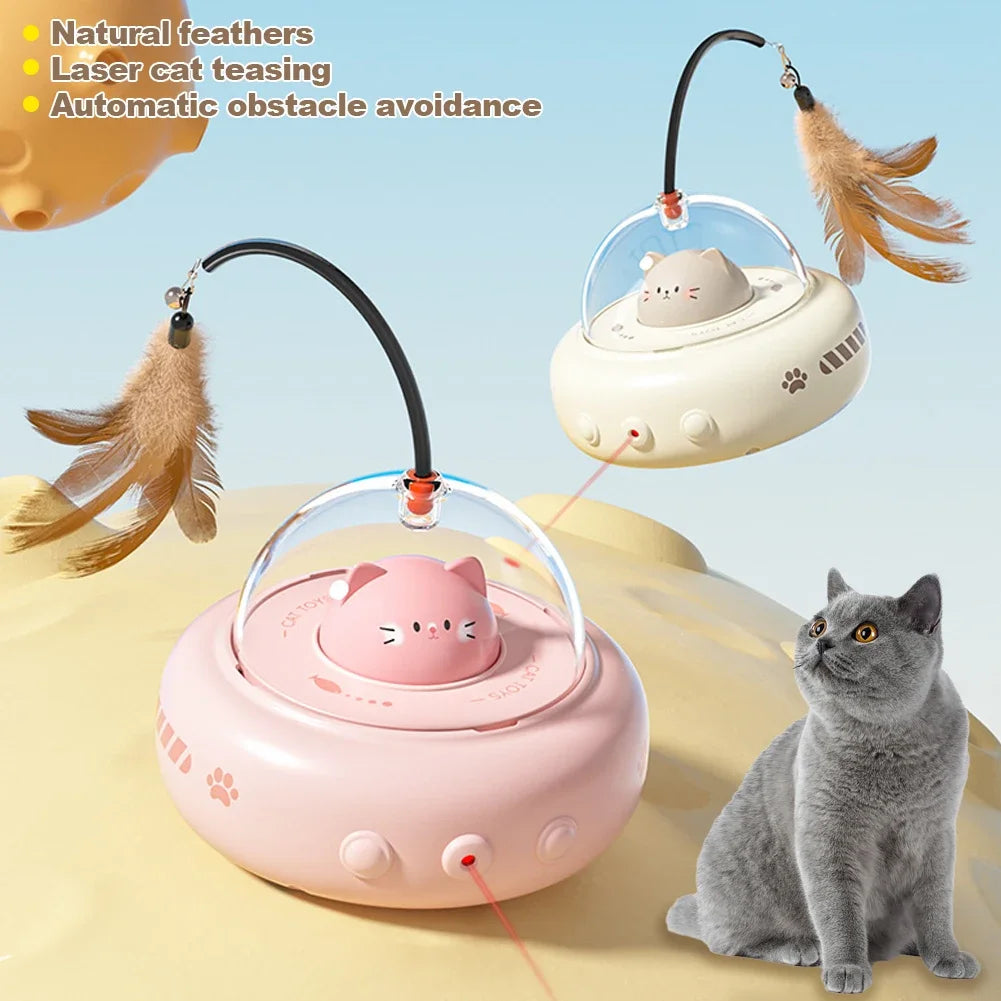
The Smart Teaser Cat Toy from Sowely is designed for interactive play and includes a feather attachment described as replaceable in the product listing. It uses a USB-charging power supply and an ABS body, with color options including Cherry Blossom Powder and Milk Coffee Color.
This type of toy is particularly useful for:
- Cats who enjoy playing with their people
- Indoor cats who need short bursts of daily movement
- Kittens developing coordination and confidence
- Cautious cats who prefer to chase from a comfortable distance
Let your cat catch the toy regularly so the session feels rewarding. When play never leads to a successful pounce, some cats may lose interest or become frustrated.
2. Automatic rolling balls for independent enrichment
Automatic rolling toys can add movement to your cat’s day when you are working, cooking, or taking a short break. They are especially appealing to cats who like to follow unpredictable motion around the room.
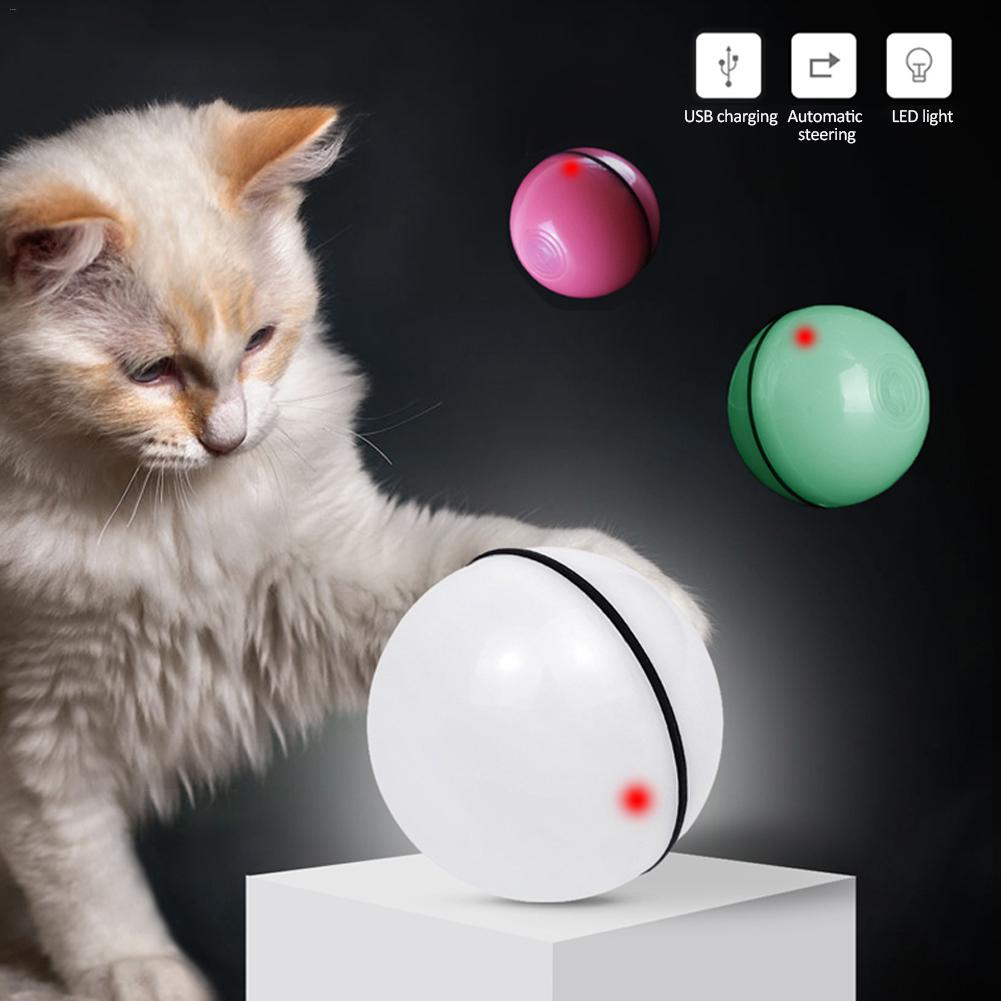
The LED Laser Electronic Rolling Pet Funny Cat Toy Ball from Sowely is described as a rechargeable rolling toy with LED lights, bells, feathers, and catnip. According to its product listing, the ball can rotate, change direction after encountering obstacles, and shut off automatically after 45 minutes. It is available in multiple colors and configurations.
A rolling toy may work well for a cat who:
- Enjoys chasing objects across open floors
- Responds to lights, sounds, or sudden movement
- Needs more activity during the day
- Prefers solo play at certain times
Introduce an automatic toy while you are at home so you can see how your cat responds. Place it in a clear area away from stairs, fragile objects, tight spaces, and loose cords. Some cats will chase immediately, while others need time to observe the toy before deciding it is worth investigating.
Automatic toys are best treated as a supplement to shared play, not a complete replacement for interaction with you.
3. Puzzle feeders and treat-dispensing toys
Interactive play does not always need to involve running. Puzzle feeders and treat-dispensing toys encourage cats to use their paws, noses, and problem-solving skills to reach a small food reward.
These toys can be especially helpful for indoor cats who eat quickly or show interest in food long after mealtime. You can place a portion of your cat’s regular daily food inside the puzzle rather than adding extra treats. That way, enrichment becomes part of the normal feeding routine.
When introducing a puzzle feeder, begin with an easy setting. If the food is too difficult to reach, your cat may become discouraged and walk away. Once they understand how the toy works, you can gradually offer a more challenging design.
Puzzle feeders are a good choice for:
- Food-motivated cats
- Curious cats who enjoy investigating
- Indoor cats who need quieter mental enrichment
- Homes where several short activities are better than one long play session
You can also make mealtime more interesting by hiding small portions of food in safe, accessible locations around one room. Always make sure your cat can reach the food easily and that no household cleaners, toxic plants, or unsafe objects are nearby.
4. Enclosed ball tracks for low-supervision play
Ball-track toys provide the satisfaction of batting and chasing while keeping the ball enclosed. This can make them a practical option for cats who enjoy solo play but tend to lose loose balls under furniture.
Look for a stable design that does not tip easily and does not contain small parts your cat can remove. A ball track can be left in an accessible play area for brief periods, although it is still wise to check the toy regularly for cracks, sharp edges, or damage.
Ball tracks may appeal to cats who like:
- Repetitive batting games
- Watching objects move through openings
- Floor-based play rather than jumping
- Quiet activities that can be enjoyed independently
For extra variety, place the track near a tunnel, cat tree, or comfortable hiding area. This creates a small enrichment zone where your cat can play, pause, and observe.
5. Tunnels, play mats, and hide-and-seek toys
Some cats love the chase, while others prefer to hide and ambush. Tunnels, crinkle mats, cardboard boxes, and adjustable play rugs can turn an ordinary room into a more interesting environment.
You can drag a teaser slowly past a tunnel entrance, allow the toy to disappear inside, and then pause. Your cat may enjoy watching and waiting before making a surprise pounce. This kind of play encourages movement without requiring constant high-speed activity.
Hide-and-seek toys are often a good match for:
- Shy or cautious cats
- Cats who enjoy ambush play
- Kittens exploring their surroundings
- Senior cats who prefer gentle, floor-level activities
A simple cardboard box can be just as exciting as a specialized toy. Rotate boxes, tunnels, and mats every few days so the environment feels fresh without filling your home with too many objects at once.
How to choose the right interactive cat toy
Your cat’s behavior will tell you a lot about the right toy. Watch what captures their attention naturally.
A cat who watches birds from the window may enjoy a feather wand or moving toy. A cat who bats at bottle caps may prefer a ball track. A cat who searches kitchen floors for crumbs may enjoy a treat puzzle. A cat who hides behind furniture may feel most comfortable with a long-handled teaser or tunnel game.
Age and mobility matter too. Kittens may enjoy several short, energetic sessions, while older cats may prefer slower movement and easy-to-reach toys. If your cat has arthritis, pain, or another health condition, speak with your veterinarian about suitable activity levels.
It is also more effective to rotate a few toys than to leave every toy available all the time. Keep two or three options out, then store the rest and bring them back later. Familiar toys can feel new again after a short break.
A simple daily play routine
A consistent routine can make interactive play easier to maintain. For many adult indoor cats, two short play sessions can work well. One session in the morning and another in the evening may fit naturally with your cat’s active periods.
A simple routine might look like this:
- Begin with five to ten minutes of wand play.
- Let your cat catch the toy several times.
- Offer a puzzle feeder with part of their regular meal.
- Leave a safe ball track or rolling toy available for supervised exploration.
- End with a calm period in a favorite bed or resting area.
Some cats will want more play, while others prefer several very short sessions. The goal is not to follow a rigid schedule. It is to create regular opportunities for movement, curiosity, and connection.
Interactive cat toy safety tips
Even durable toys should be inspected regularly. Remove any toy that has frayed fabric, loose feathers, cracked plastic, exposed wires, or detachable pieces.
String, elastic, ribbons, and small components should never be left with a cat unattended. Store wand toys away after shared play so your cat cannot chew or become tangled in them.
Laser toys require particular care. Never aim a laser toward your cat’s eyes or reflective surfaces. Since a light cannot be physically caught, finish the session by offering a toy your cat can grab or a small treat that fits within their nutrition plan.
Electronic toys should be introduced under supervision. Check that the toy does not become trapped beneath furniture, fall down stairs, or startle your cat. If your feline friend seems anxious, stop the session and try a quieter toy instead.
For more ideas on creating a stimulating indoor environment, the Best Friends Animal Society enrichment guide offers additional suggestions involving toys, puzzles, hiding places, and everyday household items.
Final thoughts
The best interactive cat toys for indoor cats are the ones your companion genuinely enjoys and can use safely. A feather teaser may be perfect for one cat, while another may prefer a rolling ball, puzzle feeder, tunnel, or enclosed track.
By offering a mixture of shared play and independent enrichment, you can help your cat stay active, curious, and engaged throughout the day. You are also creating small moments of trust and connection: exactly the kind of everyday care that makes life with a pet so rewarding.
Explore Sowely’s Pet Supplies collection to find practical products designed to make caring for your companion easier and more joyful.